
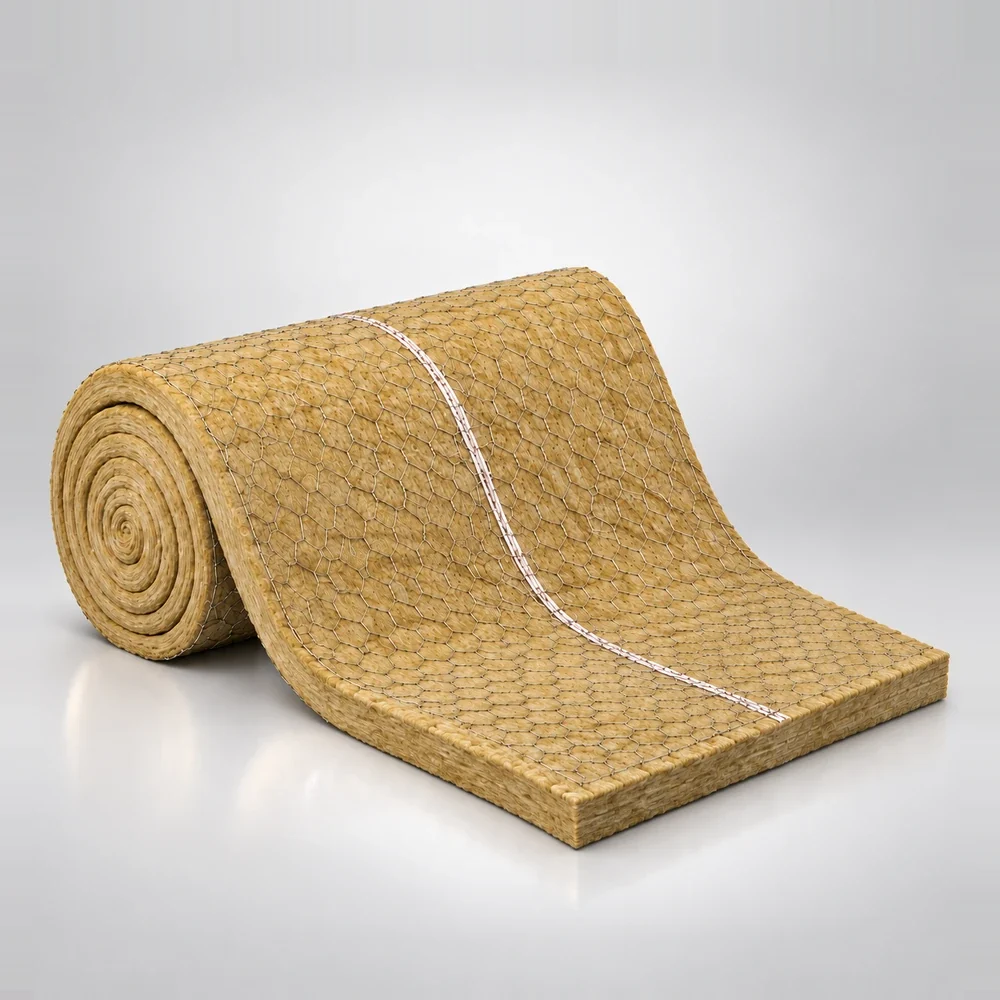
Rock Wool
Dense, absorbs a wide band of noise, and it won't feed a fire either.
- Rock Wool slab and board
- Rock Wool LRB with wire mesh
- Rock Wool sandwich panel
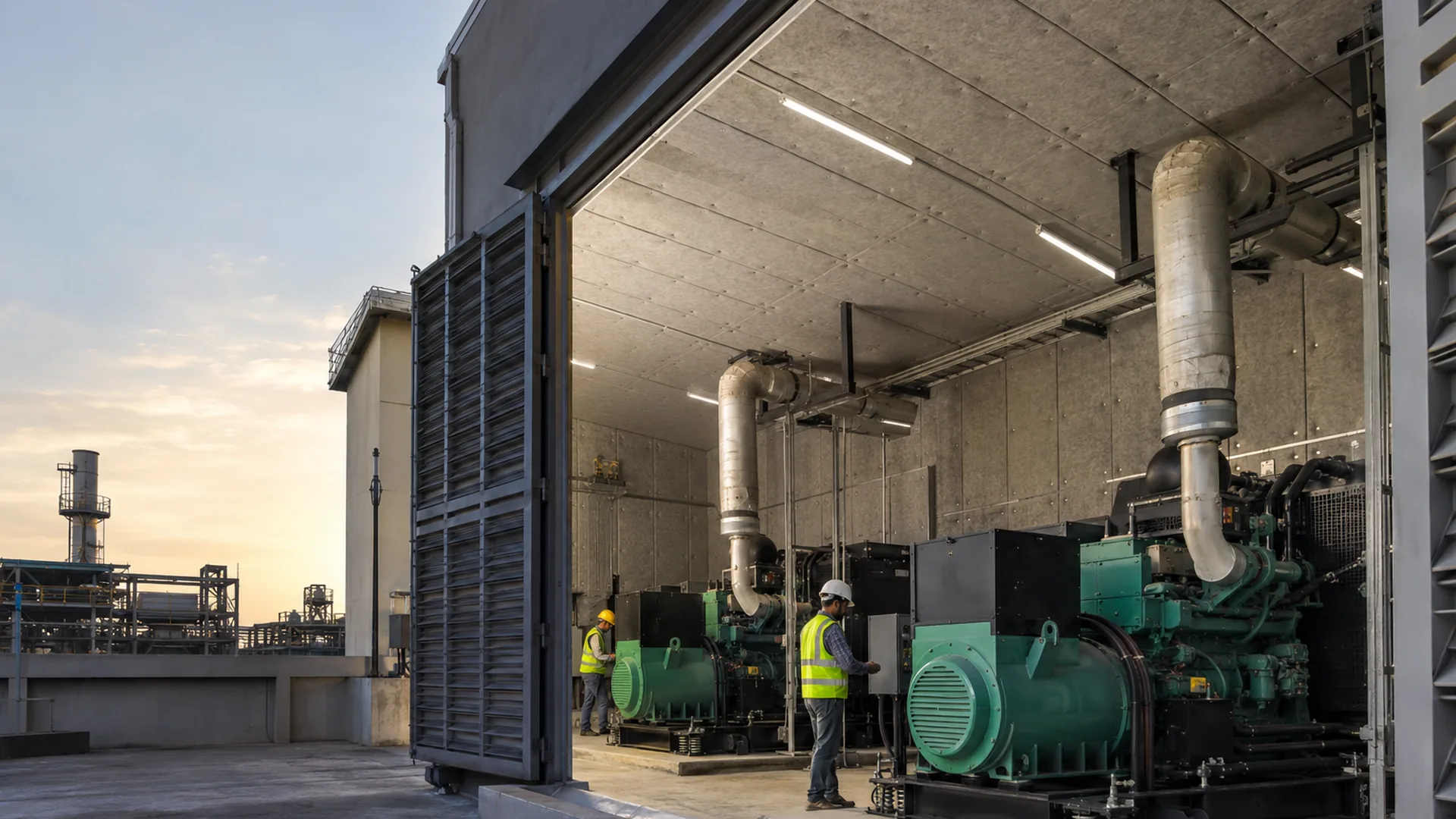
For the DG set the neighbours complain about, the compressor you can hear in the boardroom, and the hall where nobody can follow the speaker.
Say you've got a compressor in a bare concrete room. Part of that noise leaks out through the walls, the door and the roof sheet, and to cut that you need weight in the wall. The rest bounces between the hard surfaces inside, so the room gets louder than the machine itself. That second part is what sound absorbing insulation is for, rock wool or glass wool behind a perforated sheet, and on a lot of jobs it's the bit people skip.
Most soundproofing that disappoints people has only done one of the two. Foam glued onto a thin sheet wall takes a bit of echo out but blocks almost nothing. A heavy brick room with nothing on the walls blocks plenty but rings like a bell inside. We plan for both, and then we go hunting for gaps, because noise gets through a bad door seal or an open cable hole far more easily than through the wall itself.
Dense, absorbs a wide band of noise, and it won't feed a fire either.
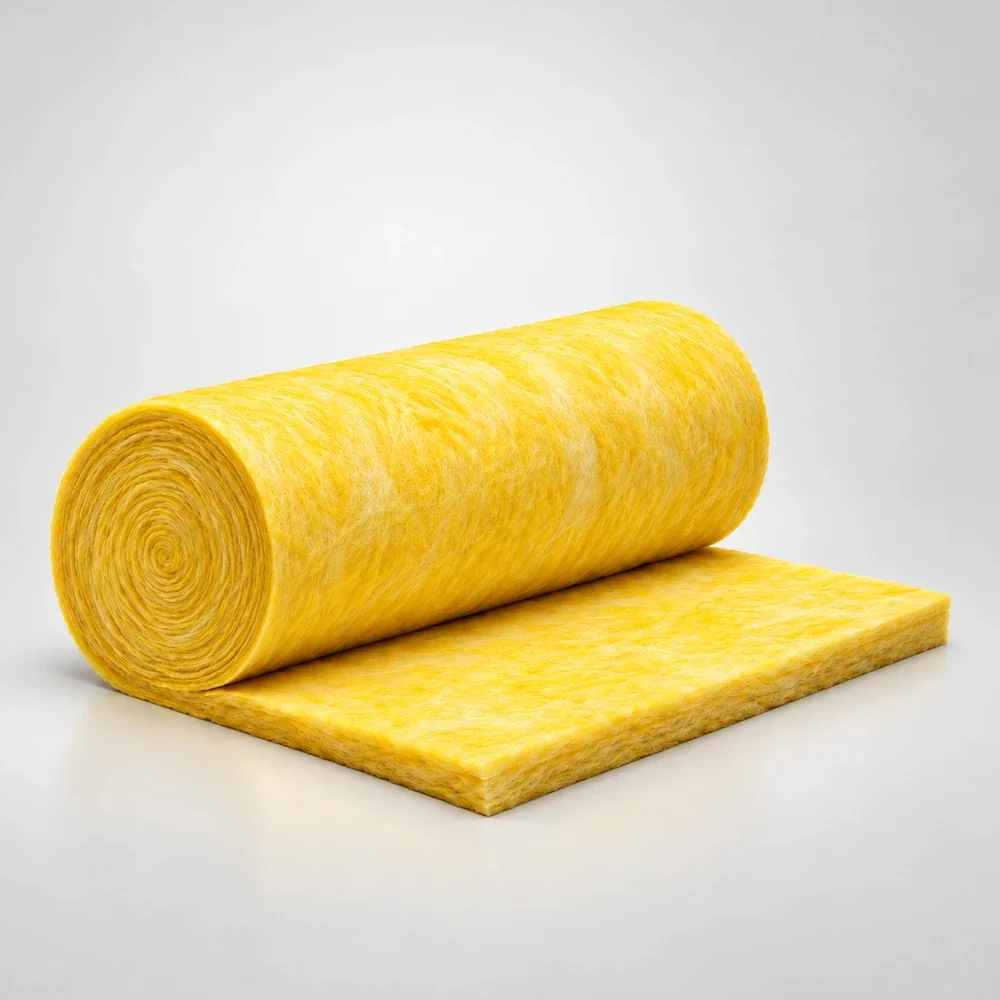
Lighter and cheaper, good in ceilings, partitions and duct lining.
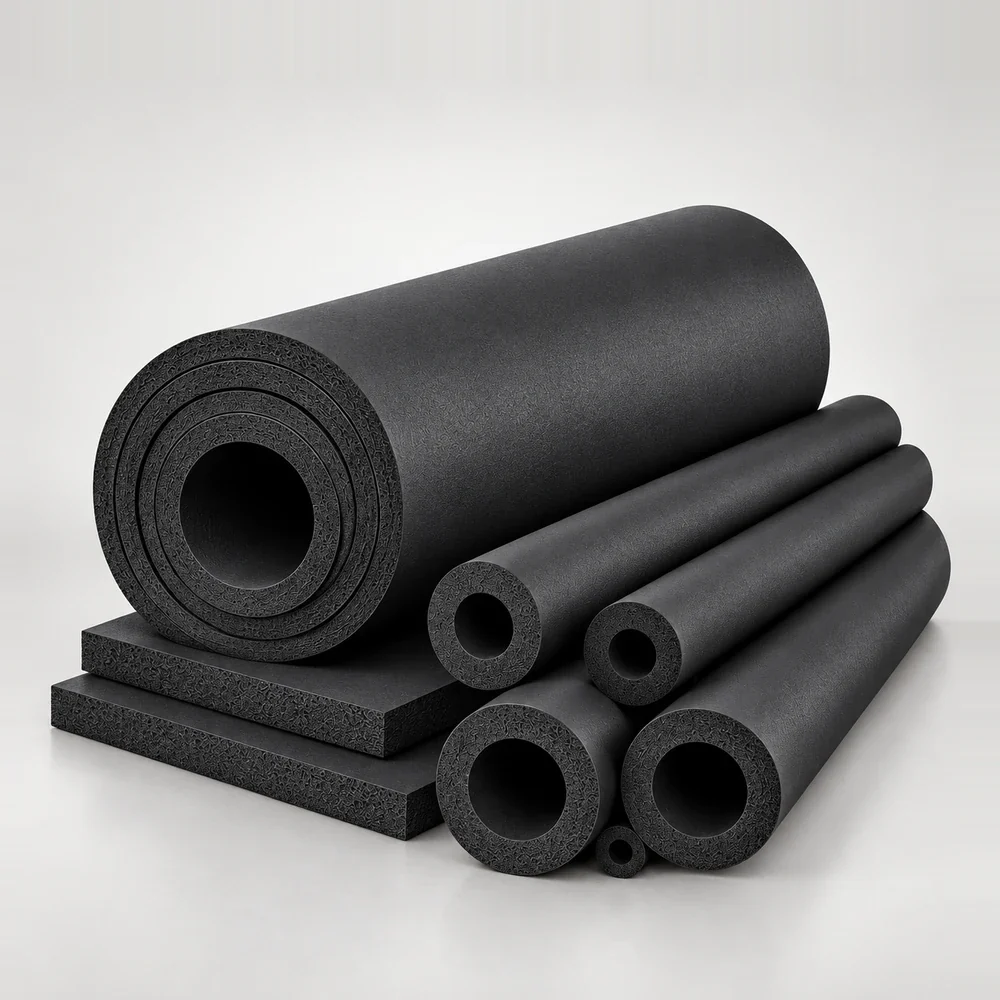
For ducts and AHUs where you want a clean surface you can wipe down.
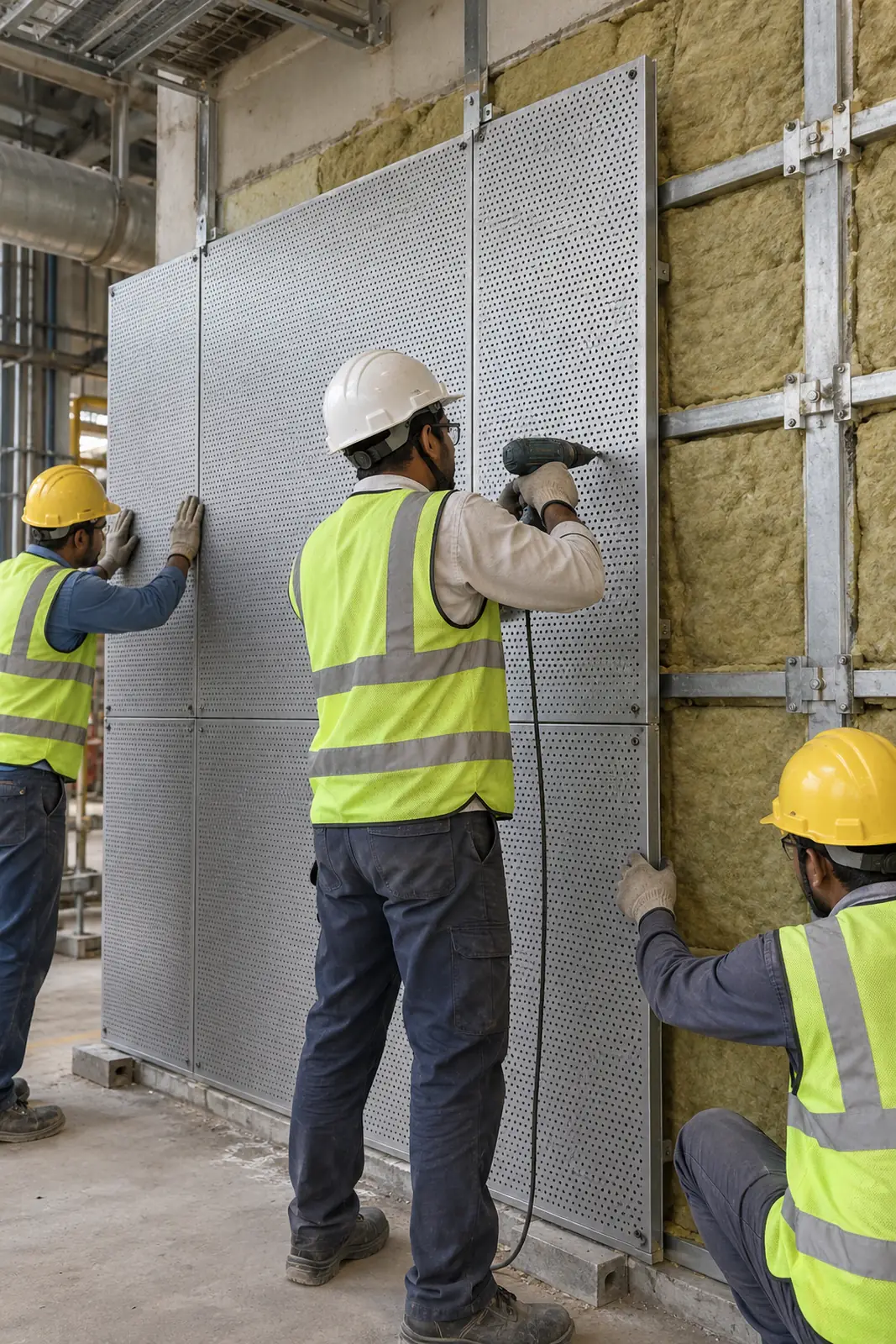
Holds the wool in place while still letting the sound reach it.
For acoustic insulation for walls between a plant area and an office, we'd normally put up a stud or channel frame, fill the cavity with density-graded rock wool or glass wool, and board it on both sides. What's hidden inside, the cavity depth, the fill and how well the edges are sealed, does far more work than the board you end up looking at.
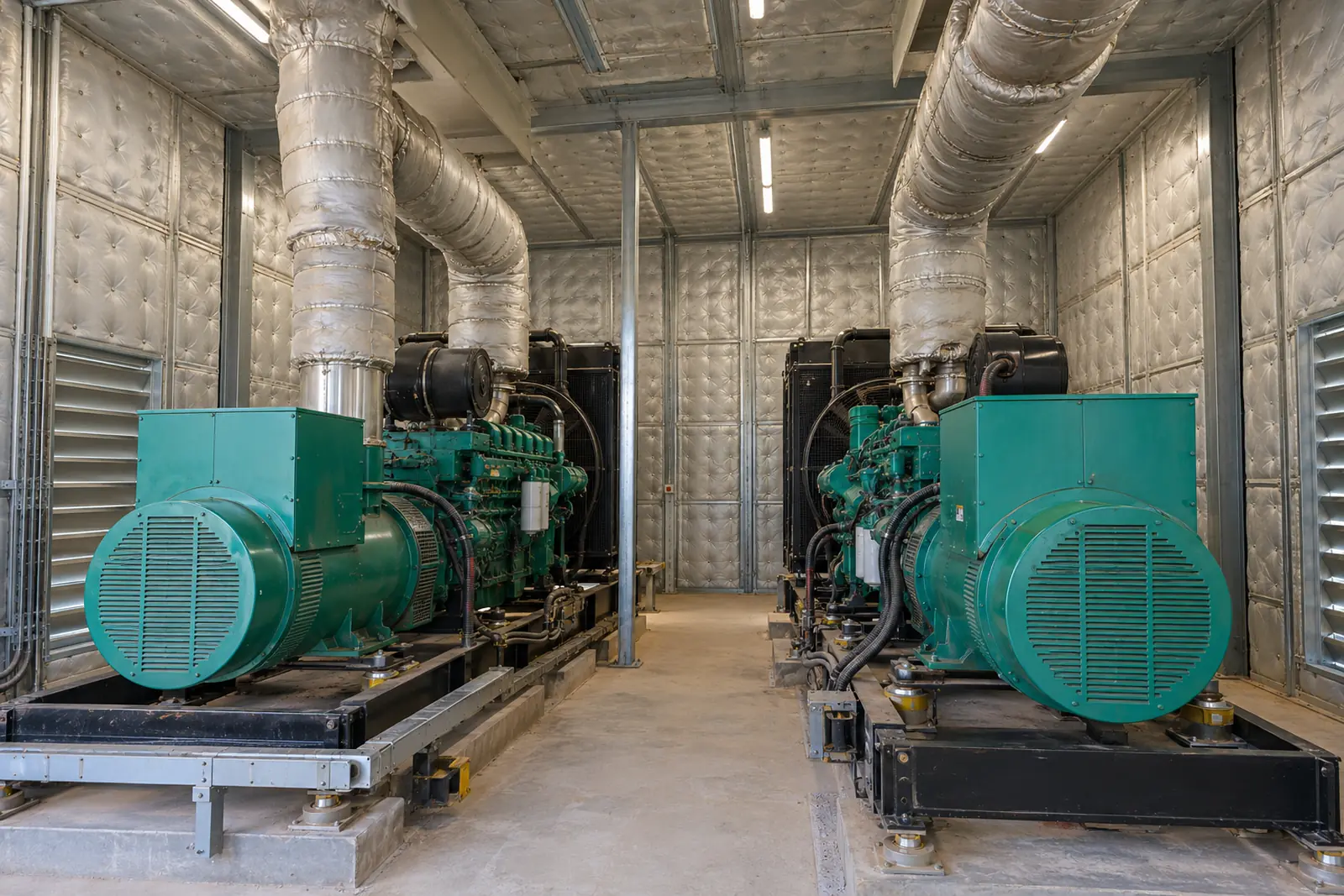
Machine enclosures are harder. A DG room needs a barrier, absorption on the inside face, and sound attenuation insulation in silencers on the air paths, since the engine still has to breathe. On a DG room and compressor house job in Ahmedabad we went with density-graded rock wool behind a perforated GI lining. The number that matters there is the reading at the boundary wall, before and after, so that's the one we measure.
| Material | What it does best | Typical use |
|---|---|---|
| Rock Wool slab | Absorbs a wide range of noise and resists fire | Enclosures, DG rooms, walls |
| Glass wool acoustic board | Light absorption at lower cost | Ceilings, partitions, duct lining |
| Nitrile acoustic board | Absorbs noise with a clean surface | AHUs, ducts, clean areas |
| Dense board or sheet | Blocks sound passing through | Outer skin of walls and enclosures |
How we work, the same four steps on a single line or a plant-wide shutdown.
We look at what's making the noise, the room it's in, every opening, and where exactly people are hearing it. If we can, we take readings first.
Barrier, absorber, frame and sealing all go into the written spec, along with the target we're aiming for and the rate.
Material comes from our stock and our crew fits it, working around running machines where that's needed.
Joint measurement and photos, and if we agreed on it, readings taken after the work so you can see the change.
Still unsure? Send us the duty and a few photos and we will tell you what we would fit.
Depends on the problem. We use dense rock wool a lot because it absorbs well and won't burn. But if you're trying to keep noise out of the office next door, which is really sound insulation for walls, wool on its own won't do it, you'll need a heavy board layer as well and the edges sealed.
Not quite, though people mix them up all the time and that's fine. When we say soundproofing we mean keeping the noise in its own room, with mass and sealing. Treatment is about the echo inside the room, and that's done with absorbing material. A plant room usually ends up needing a bit of each.
Yes. The DG room or canopy gets lined with absorbing material behind a perforated sheet, there's a solid outer barrier, and the air inlet and outlet are treated. We check how it's doing at the boundary.
Usually it does. Rock Wool and glass wool are thermal insulators too, so an acoustic wall or ceiling cuts down heat transfer as a side benefit.
We do. Partition walls, ceilings and wall panels for offices, conference rooms and auditoria all come under our building work.

Tell us what's making it, which room it's in and where it's bothering people. We'll propose a barrier and absorber setup with a written rate.
clients so far, from refineries and power plants to pharma and textile units